When Business Software Comes with Built-in AI Agents, Does Your Enterprise Still Need a Separate Platform?
Enterprises face a choice: use the AI Agent capabilities embedded in existing business software or build an independent platform. This article analyzes the pros and cons of both approaches, emphasizing the need to align decisions with actual business requirements, maintenance costs, and integration depth.
By Hou Yanjun
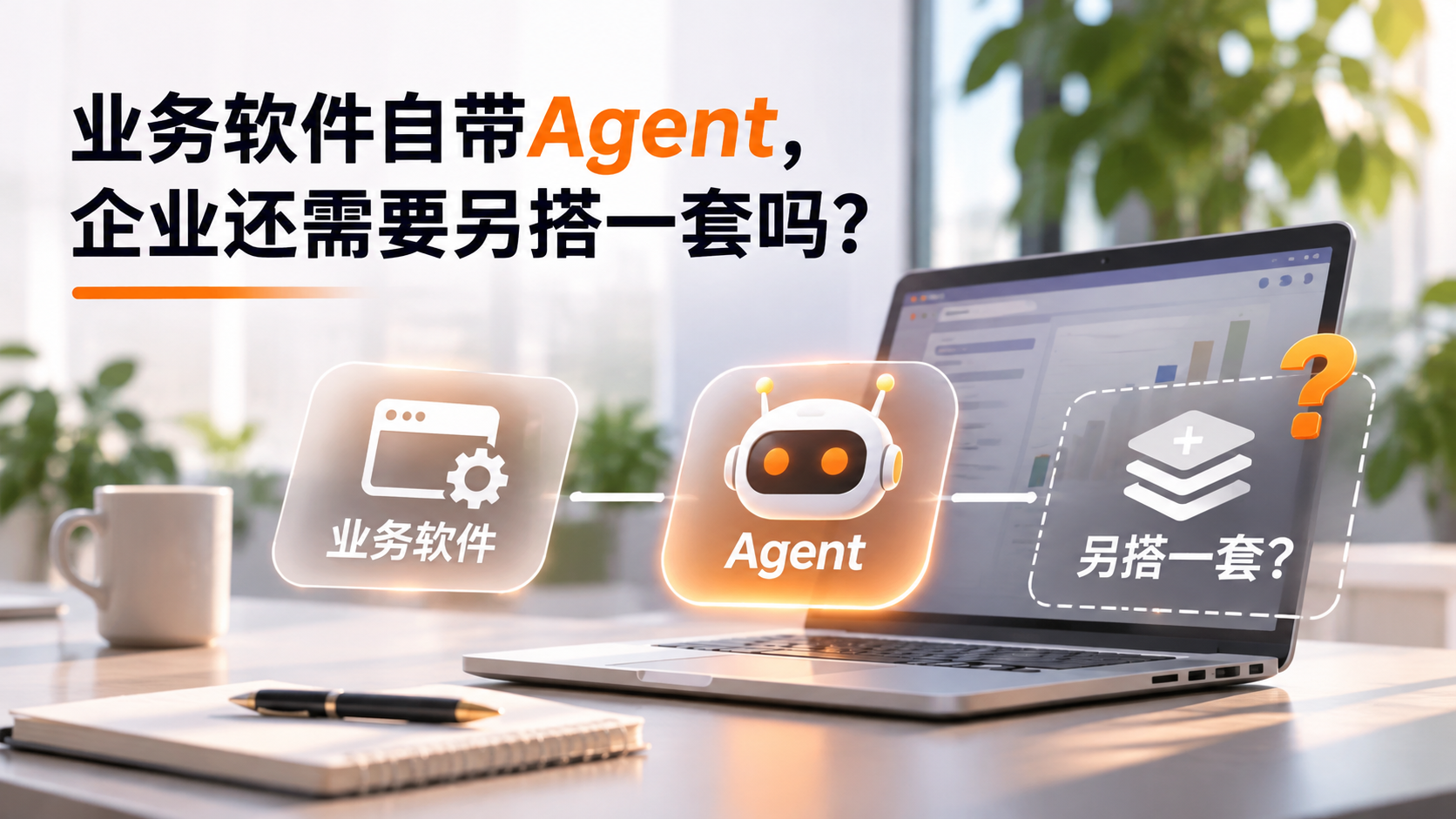
Enterprises have already invested in CRM, ERP, and HR systems—now these software solutions come with built-in AI Agents. Original vendors claim AI applications can run within existing systems, while external service providers propose building separate platforms to connect different systems. How should enterprises choose?
This decision shouldn't be based solely on feature comparisons. Both options may offer data queries, report generation, and workflow automation, but real-world implementation reveals stark differences in required modifications and maintenance responsibilities.
On October 21, Oracle launched an industry-specific AI Agent Studio, providing an environment to create, test, orchestrate, deploy, and monitor Agents—essentially leveraging existing application data, tools, and business processes.[1] This release highlights an important trend: enterprise AI adoption doesn't necessarily start from standalone chat interfaces but can extend from employees' daily business systems.
For enterprises already using such software, this path holds clear appeal. Customer, order, and employee data reside within these systems, with operational permissions and approval workflows pre-configured. Agents that directly utilize these capabilities eliminate redundant data transfers and configurations.
However, "built-in" doesn't automatically mean business-fit. Enterprises must verify: which modules are supported? What operations can be executed? Is the current version functional? How are new features priced? Demo capabilities often differ from actual account permissions.
For problems confined to a single system, exploring existing software's capabilities first proves pragmatic.
Example: If employees already log customer interactions in CRM and simply need faster follow-up summaries and meeting prep materials, rebuilding customer data elsewhere just for an AI interface creates new synchronization headaches.
Independent platforms should address genuine gaps. Cross-system workflows—like compiling project analyses combining CRM sales data, financial system payments, project delivery statuses, and scattered contract terms—require integration beyond any single system's Agent capabilities.
Yet cross-system integration isn't just about API connections. The same client may have different names across systems; one order might link to multiple deliveries; "revenue," "contract value," and "payment received" represent distinct metrics. Data extraction alone won't ensure business-meaningful results without clear mapping rules.
Unresolved data relationships risk generating polished but misleading reports—the smoother the output, the more critical the verification.
Before building independently, enterprises must define the new platform's purpose: data aggregation? Analytical recommendations? Direct system modifications? Each requires different integration depths and maintenance commitments. "Building an enterprise AI platform" shouldn't become a catch-all for undefined needs.
Current enterprise AI implementations I oversee combine third-party platforms like WorkBuddy with custom-built systems. The choice depends on task specifics: knowledge-intensive workflows with tool integrations may suit existing platforms, while processes requiring strict data handling rules demand custom development.
For instance, our AI data security system anonymizes enterprise materials before external analysis, then reconstructs results using predefined mappings. This standalone module serves clear purposes—tracking pre-processing checks, rejection rules, and reconstruction methods—without recreating analytical capabilities.
This modular approach applies to business software and Agent platforms:
Legacy systems maintain official records and approval workflows; Agents handle cross-system data compilation and recommendations, submitting review-ready content via controlled interfaces. Independent platforms needn't replace original systems or demand full write permissions.
However, additional platforms mean additional maintenance. Changes to source system interfaces, fields, or permissions require ongoing validation. New requirements must be evaluated: modify legacy systems? Adjust Agent configurations? Or alter connections between them?
Implementations focused solely on "can we build this" without maintenance planning often yield impressive demos that nobody dares modify. After vendor handover, business teams find errors while IT lacks context—leaving enterprises dependent on original implementers.
When evaluating options, initial pricing is just one factor. Consider: How are new requirements accommodated? What are modification costs? Is data exportable? Can another vendor take over? Even built-in Agents require these assessments—don't assume original vendors guarantee lower long-term costs.
Enterprises should test different approaches with real tasks, comparing end-to-end processes from data preparation to usable results.
Does rebuilding duplicate existing system capabilities? Do independent platform additions justify extra maintenance? How does each handle missing data or metric mismatches? These practical comparisons prove more valuable than "native integration" or "unified interface" marketing claims.
If legacy systems lack just one feature, augment them. If cross-system workflows recur with clear ROI, consider building an independent collaboration and analytics layer.
Enterprises need solutions that work. The number of platforms used should emerge naturally from problem-solving—not from predetermined "rebuild" mandates.
References
[1] Oracle, October 21, 2026: Oracle AI Agent Studio for Industry Applications Helps Accelerate Business Outcomes. Official product announcement; described integration and execution capabilities apply to supported applications and scenarios, not all Oracle customers currently have access to full functionality.